
Accelerating MRM Tech’s Proposal Writing with AI
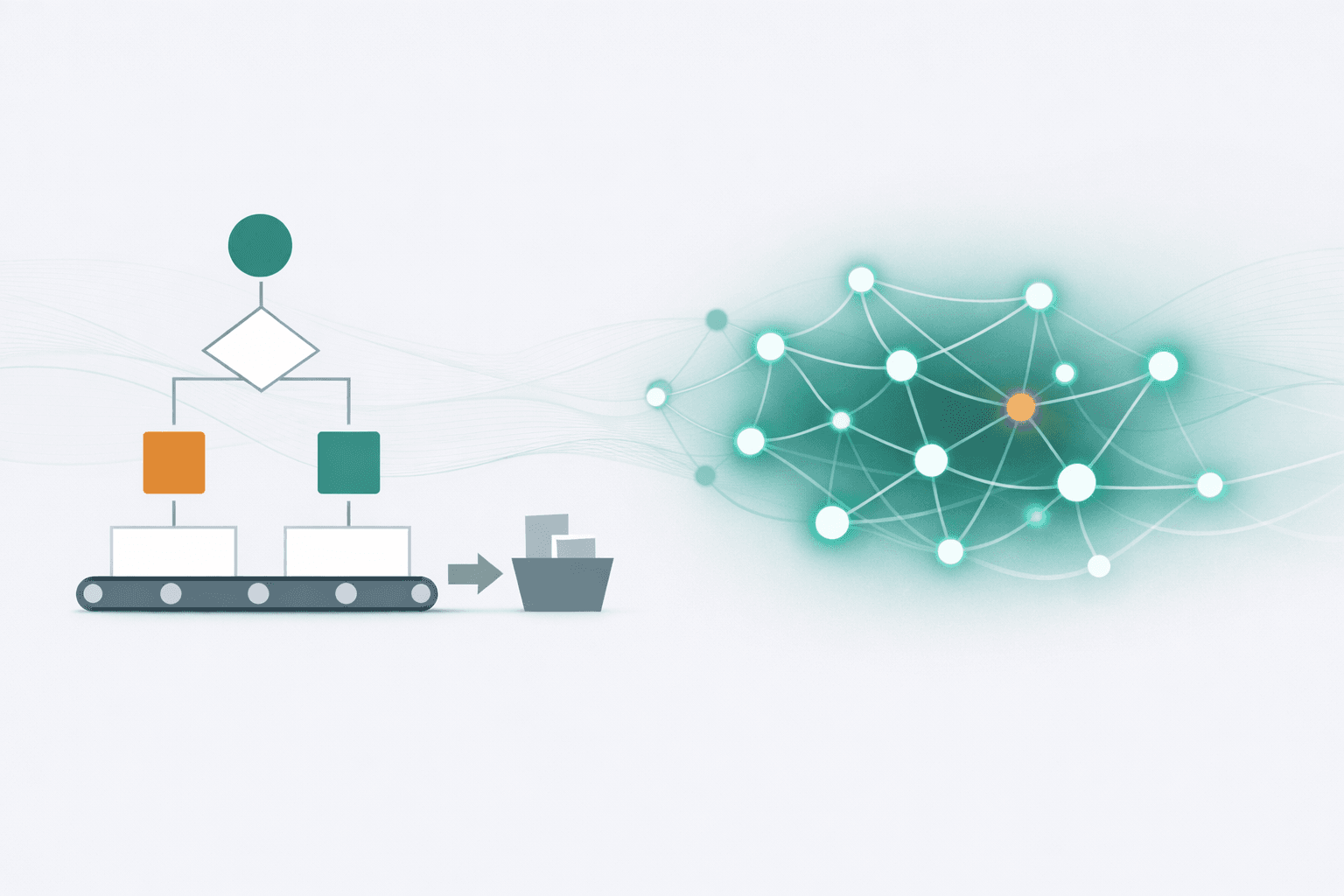
At MRM Tech, we pride ourselves in optimizing workflow for our clients. One area where we are focusing our own improvement efforts is proposal writing, particularly in streamlining our response to project inquiries that share common elements. We recognized the opportunity to leverage Artificial Intelligence (AI) to reduce the time spent on initial information gathering and preliminary scoping for familiar project types.
Challenge: Addressing Duplicated Efforts in Proposal Writing
MRM Tech's first engagement with a potential client is usually a brief email conversation or discovery call to understand their needs and determine alignment. Then, MRM Tech creates a preliminary proposal, which generally takes at least two days.
To reduce the upfront time investment and the client waiting period, MRM Tech wanted to build an AI-driven workflow that could assess the needs of potential clients, identify relevant solutions features from past projects, and produce a preliminary proposal document shortly after the first interaction. This would enable the MRM Tech team to quickly determine whether the project is a good fit and accelerate downstream solution design efforts.
Solution: An AI-Powered Proposal Writing Assistant
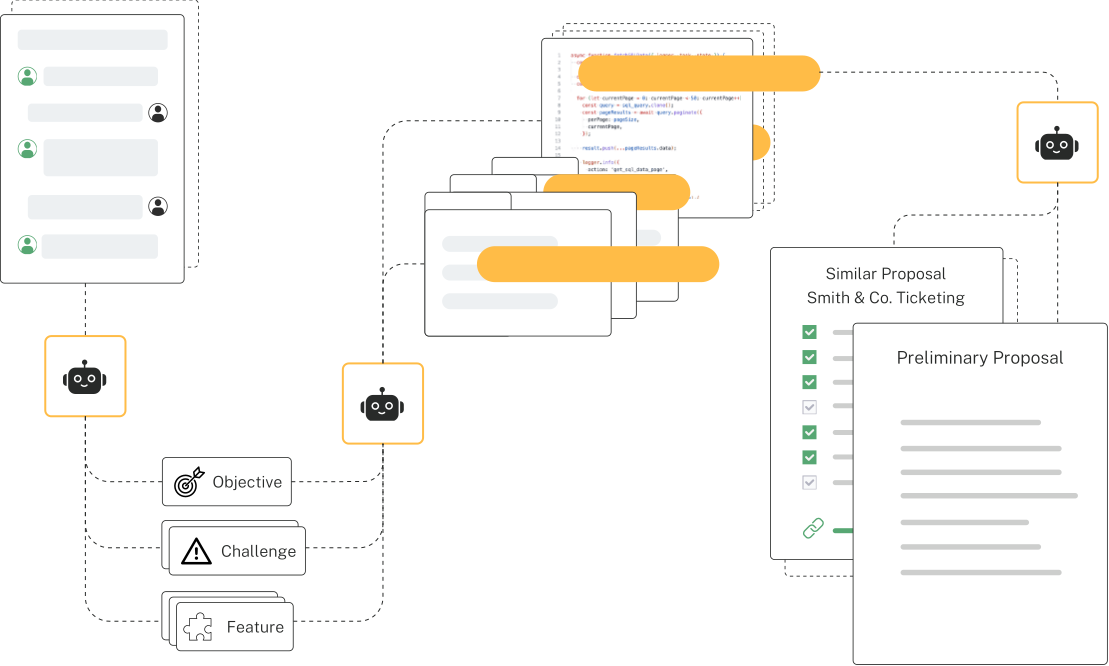
MRM Tech's AI agent streamlines the proposal creation process by extracting key project information from initial client conversation, whether email thread or meeting transcript, and then leveraging a database of past work, such as proposals, documentation and codebases, to identify similar projects and relevant solution features.
The agent synthesizes this information into a concise proposal that outlines client needs, MRM Tech's proposed approach to meeting those needs, and additional solution features for consideration.
This automated process enables the creation of a preliminary proposal immediately after having the initial conversation with a prospective client, serving as an excellent starting point for deeper discussions.
Under the Hood: Building a Context-Aware Agent with RAG
The effectiveness of MRM Tech's proposal AI agent relies on a well-structured data management system and the implementation of a Retrieval-Augmented Generation (RAG) pipeline. This architecture allows the system to effectively find and leverage past project knowledge to generate informed proposals.
Core Integration
The system leverages one of Google’s Gemini Large Language Model (LLM) APIs for analyzing client inquiries and composing proposals - though the choice of LLM matters little compared to thoughtful prompt engineering.
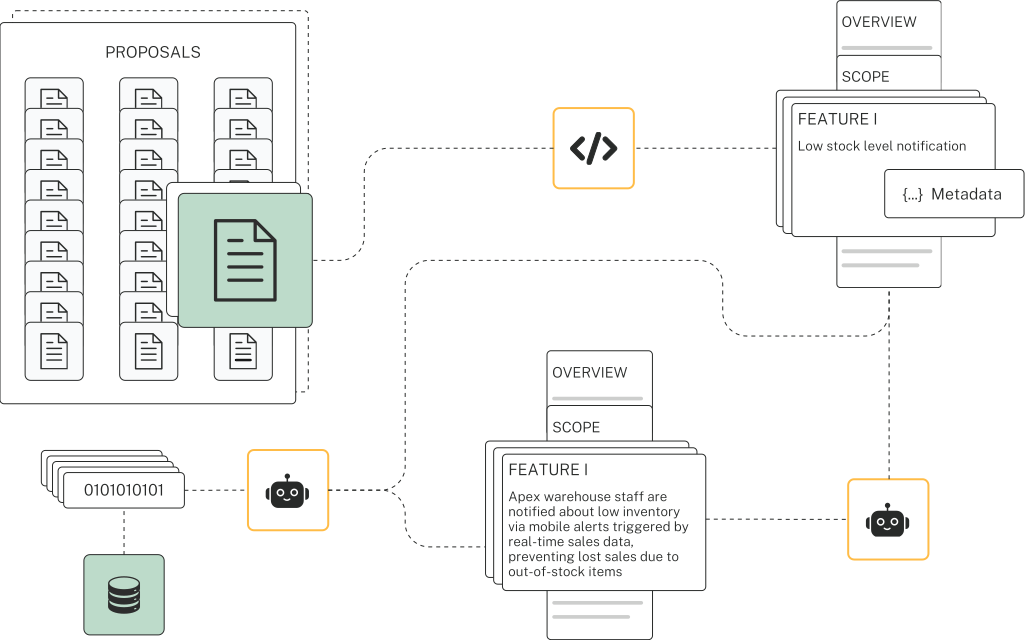
MongoDB Atlas Vector Search serves as the central knowledge base, storing anonymized vector embeddings of MRM Tech's past proposals, case studies, project documentation and codebases, enabling efficient semantic retrieval of similar project information.
Knowledge Preparation and Retrieval
MRM Tech's historical documents undergo a process of chunking into meaningful segments. These anonymized chunks, along with relevant metadata, are converted into vector embeddings. To enhance the relevance of retrieved documents by improving the signal-to-noise ratio in the vector space, an LLM agent is employed to additionally generate contextual summaries of each chunk. These vector embeddings are searched against when looking for similar projects.
When a new client inquiry is received, key pieces of information are extracted, such as the project objective and key challenges faced by the organization. Each of these pieces of information is embedded and compared against past work in the vector database to find projects with similar characteristics, such as objectives and challenges.
Proposal Generation
The retrieved contextual information is then incorporated into a final prompt. The LLM model uses this augmented prompt - the client's needs combined with retrieved, relevant past work - to generate a preliminary proposal document.
Outcomes: Improved Efficiency and Better Alignment
The AI-powered proposal assistant has enabled MRM Tech to deliver preliminary project proposals to potential clients much faster. It ensures that client needs are accurately captured, and that proposed solutions are consistent with relevant past work and successful client engagements.
Additionally, the system provides a more accessible and unified view of past solutions, which allows the MRM Tech team to quickly find alignment and deliver the right solutions.